Punto de encuentro de todos aquéllos que estén interesados en vida y obra del Padre Leonardo Castellani (1899-1981)

Para comunicarse con nosotros, escribir a castellaniana1899ARROBAgmailPUNTOcom
Mostrando las entradas con la etiqueta Cultura. Mostrar todas las entradas

miércoles, 3 de febrero de 2021

Castellani como periodista (2ª parte)


Cultura
SEGUNDA PARTE DE LA CONFERENCIA RECUPERADA SOBRE LA RELACION DEL SACERDOTE-ESCRITOR CON LA PRENSA

Castellani como periodista (II)

El aterrizaje de Castellani en el periodismo tuvo un inesperado efecto apostólico, que también me explicó Carlitos Ibarguren, pues fue él quien, fino observador, lo advirtió en su momento, siendo asimismo partícipe del fenómeno.

Dividía Carlitos a los nacionalistas en dos grandes grupos: los "catos" y los "curdos". "Catos" eran los católicos, provenientes muchos de los Cursos de Cultura Católica, con buena formación doctrinal y firmes defensores del aspecto religioso incluido en el legado hispánico. Los "curdos", en cambio, eran los viejos muchachos, patriotas instintivos a quienes las cuestiones espirituales los habían tenido más o menos sin cuidado, provenientes de la milonga y proclives al castañazo y el exabrupto. Carlitos se preciaba de contarse entre ellos. 

No en vano, con malévola exageración, cierta publicación de izquierda, al informar sobre un acto político donde habló Carlitos y terminó en trifulca, dijo de él: "Harto de apalear mujeres y romper espejos en los cabarets se hizo fascista".

Pues bien, esos viejos muchachos, afines con los que décadas atrás habían militado en la "Liga Patriótica" de los Carlés, advirtieron un día con sorpresa que un cura era de los suyos. Y lo advirtieron a través de los escritos del Padre Castellani en las publicaciones nacionalistas que mencioné.

Descubrimiento éste que los impulsó, primero, a mirar al clero con mayor interés y, paulatinamente, hacia unas prácticas religiosas de las que habían estado lejos, pese a conocerlas por ser hijos de madres devotas. 

Ejemplo de ello es el caso de Eduardo Muñiz, Nenucho, temible dibujante en varias de las publicaciones nacionalistas que he mencionado. Nenucho era agnóstico y, como digo, poseedor de una cáustica agudeza, que se revelaba en sus caricaturas. Sin embargo, admirador de Castellani, terminó concurriendo los domingos a la iglesia del Tránsito, provisto de un grabador, a fin de registrar los comentarios al Evangelio que hacía el cura en su sermón. Comentarios que, conviene apuntarlo, dieron lugar a ese espléndido libro de éste que se llama, precisamente, El Evangelio de Jesucristo. Y a otros sucesivos que se siguen publicando bajo el título de Domingueras Prédicas.

-o-

Ruego me disculpen si me cito a mí mismo. Pero, como ya me ocupé de Castellani como periodista en un librito lleno de erratas que me publicó la editorial AZ, repetiré unos párrafos del mismo que estimo oportunos. Digo allí:

""Para calibrar adecuadamente las implicancias de su actuación periodística, en órganos de definido carácter ideológico, es necesario recordar que ésta tiene lugar a principios de la década del 40 y que la Segunda Guerra Mundial había dividido al planeta en general y a Buenos Aires en particular, determinando bandos ferozmente enfrentados: aliadófilos y germanófilos, nacionalistas y democráticos, fascistas y cipayos, dicotomías todas que encerraban una oposición inconciliable. Ello, naturalmente, informa la política de la época y le confiere áspera intemperancia: no está el horno para bollos. Y, apenas concluida la guerra, el advenimiento de Perón determinará que nadie baje la guardia, continuando los enfrentamientos con otros motivos inmediatos y parecidas causas mediatas.

"En este ambiente caldeado esgrime Castellani su pluma de periodista, asistida por luengos saberes teológicos, filosóficos, históricos, psicológicos, literarios. Y, si bien nuestro autor tratará con altura catedrática temas específicamente ligados con su formación académica, en otras oportunidades utilizará tal formación para opinar en cuestiones de picante actualidad. Si a ello se agrega el personalísimo sentido del humor que posee y su invariable costumbre de llamar a las cosas por su nombre, se comprenderá por qué sus artículos, leídos con avidez, levantan roncha".

Castellani era lo que luego se llamaría "un escritor comprometido". Pese a lo cual, nunca se definió a sí mismo como nacionalista, aunque nacionalistas hayan sido la gran mayoría de sus amigos. Y aunque llegara a ser candidato a diputado por la Alianza Libertadora Nacionalista, postulación que terminó de arruinar su relación con la Compañía de Jesús.

Dije que fue un "escritor comprometido" y que nunca se definió a sí mismo como nacionalista. Lo que pasó es que su verdadero compromiso fue con la verdad, tal como la veía en cada caso abordado por su aguerrida pluma.

-o-

Mis amigos y yo tuvimos un periódico que se llamó De Este Tiempo y que apareció en los años sesenta. Castellani escribía en él con bastante regularidad. Y, a propósito de sus colaboraciones, recuerdo que llegaban escritas a mano, con esa letra suya amplia, clarísima, casi escolar, que ponía de manifiesto su intención de ser entendido, a la vez que revelaba la falta de afectación de su carácter.

Dicen que sabía escribir a máquina, pero no lo hacía. De allí que mencionar "su aguerrida pluma", como acabo de hacer, no sea en realidad una metáfora.

Bueno ¿y qué decía la aguerrida pluma del propio Castellani sobre el periodismo y los periodistas? Un botón de muestra es el capítulo denominado "La Información", de su libro El nuevo gobierno de Sancho.

En pleno ejercicio del mando, instalado Sancho en la Sala de Sumas Examinaciones, se presenta un candidato a examinarse y Sancho pregunta:

-¿Quién es?

Le responde su colaborador Pedro Recio:

-Señor, es un aprovechado garzón destos reinos que acaba de acabar sus estudios.

-¿Pariente de los Garzones de Córdoba?

-No, señor, en modo alguno. Ni por pienso.

-¿Y qué estudios ha hecho?

-Estudios de periodista.

-¿Dónde?

-En todos los cafés, bares y bebederos públicos desta Insula.

-¿Qué leyó?

-Todos los libros de la Editorial Tor y la Editorial Claridad y además las obras completas de Vargas Vila, sin contar que tiene aprobado el bachillerato argentino (aclaro yo que la editorial Claridad es una editorial masónica y que Vargas Vila era un autor pornográfico).

-¿Qué demanda?

-Demanda de su Prominencia solamente el merecido diploma de Redactor de Primera Plana y, si fuera posible, el correspondiente puesto en el mejor diario de la Insula.

A continuación Sancho toma examen al candidato, del cual extraeré sólo algunas preguntas y respuestas.

-Señor Periodista ¿cómo se llaman las noticias del extranjero?

-Información.

-¿Y las noticias del país?

-Otras informaciones de carácter local.

-¿De qué hablará Chamberlain en su próximo discurso?

-De los fines de la guerra aliados.

-¿Y en el otro siguiente?

-De los fines aliados de la guerra.

-¿Y Hitler?

-Del Tratado de Versalles.

-¿Y Roosevelt?

-Del cariño que tiene a Sudamérica.

-¡Muy bien! Y dígame un poco ¿cómo son las incursiones nocturnas?

-Infructuosas.

-¿Y el fuego de artillería?

-Nutrido.

-¿Cómo se retiran las patrullas enemigas?

-En desorden

-¿Y nuestras tropas?

-Habiendo obtenido todos sus objetivos.

-¿Por qué peleamos nosotros?

-Por la justicia y el derecho.

-¿Quién tiene la culpa de la guerra?

-Los contrarios.

-¿Hacia dónde vamos con certeza?

-Hacia la victoria.

-La victoria ¿qué traerá?

-Un mundo mejor.

-Un mundo mejor ¿en qué consiste?

-En la fraternidad universal, por encima de todas razas y religiones.

Como ven, Castellani no era un devoto admirador de la sapiencia periodística en general, aunque respetaba y sentía afecto por algunos periodistas en particular. Escribió también sobre la prensa:

El diario de hoy es viejo y dice lo mismo que ayer.
Homero es nuevo como el sol.
El diario lo sé de memoria y por eso me pongo a leer
la última noticia en Platón.

Pues bien, pese a no considerar al periodismo un sacerdocio y pese a no guardar una actitud reverente ante la prensa, el cura ejerció el periodismo con denuedo, valiéndose de la prensa para servir a la patria y divulgar esforzadamente la verdad. Que no es poco mérito.

*Esta conferencia fue pronunciada el 14 de octubre de 2011 en la Universidad Católica Argentina.


viernes, 2 de agosto de 2019

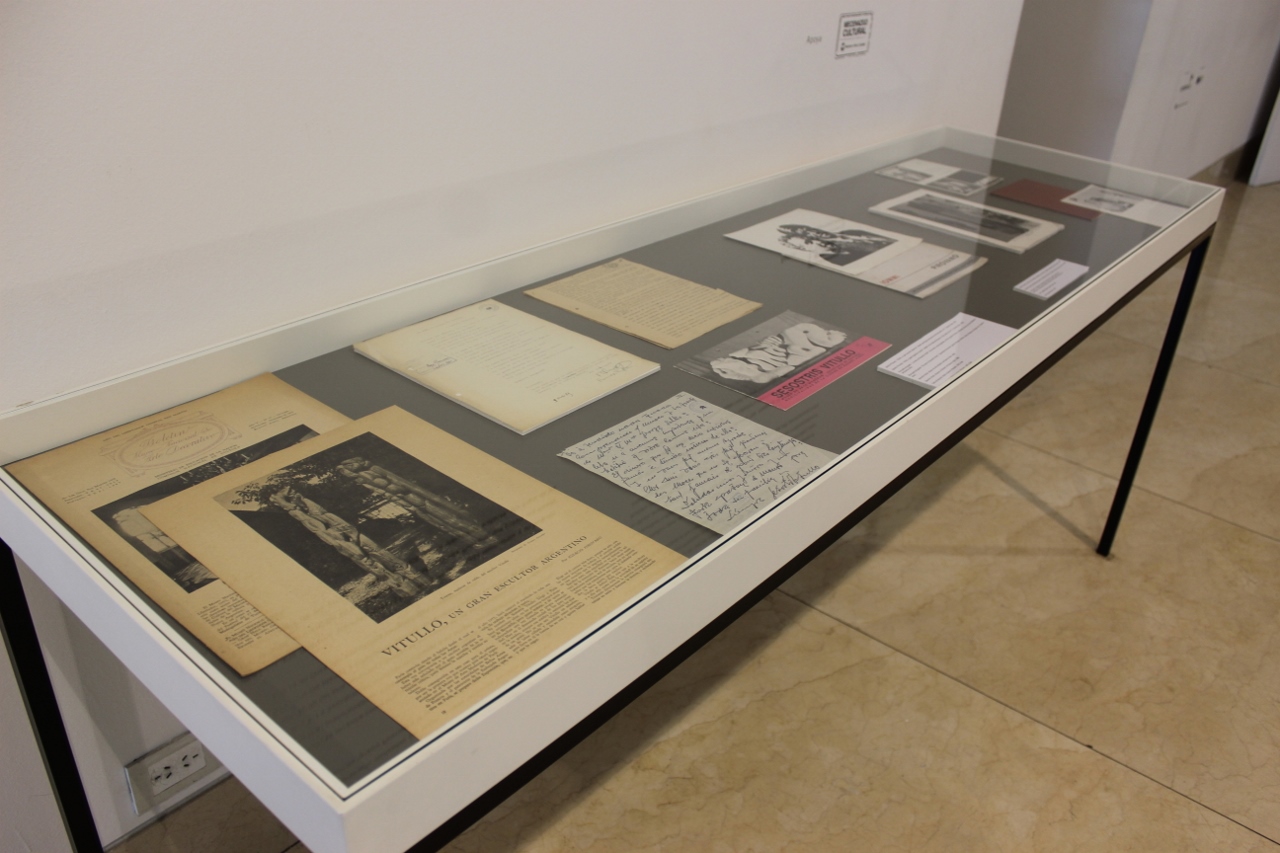
Cartas del P. Castellani al Dr. Ignacio Pirovano 1953-56


Conjunto de cartas enviadas por Leonardo Castellani, sacerdote y escritor argentino, a Ignacio Pirovano entre 1953 y 1956. En este caso no se conservan las copias de la correspondencia remitida por Pirovano, sino únicamente las cartas recibidas, las cuales muestran desde el vínculo de amistad que los unía hasta el tratamiento de temas de política y cultura. Algunas fueron escritas por el jesuita durante su estadía en Cume-Có, estancia de la familia Pirovano.
En 1980 Josefina Pirovano de Mihura, tras la muerte de su hermano Ignacio y de acuerdo con su voluntad, decidió donar un conjunto de obras al Museo de Arte Moderno de Buenos Aires. En ese contexto, la Biblioteca del Museo recibió para su custodia parte del Fondo Personal de Ignacio Pirovano.
En el sitio del Museo de Arte Moderno.

Ignacio Pirovano (1909-1980) fue abogado, pintor, diseñador-decorador, gestor cultural, empresario ganadero, etc. Entre 1937 y 1955, dirigió el Museo de Arte Decorativo y entre 1952-53, estuvo a cargo de la Comisión Nacional de Cultura.

Archivo con un PDF combinado de toda la correspondencia con Castellani.


lunes, 10 de diciembre de 2018

Castellani in English: "On Subversion"

On Subversion

By Father Leonardo Castellani

Taken from Jauja, a monthly review, issue N° 10, October 1967
Translated from the Spanish by Roberto Hope Sánchez Mejorada

I have here a small heap of clippings on SUBVERSION — the Anti-Communist Law included —. These newspaper editorial writers know plenty; they know about everything, from the strategy in Vietnam to the sale of vegetables in carts, but they don't know the meaning of words. Thus, subversion, for example, means to them "extremism of right and left"; and "extremist" is whoever thinks something that is not convenient to them. So, it behooves for us to explain that strange word in three "tempos": tempo adagiotempo andante con moto and tempo mesto con serenitá.

Adagio

1° — Today's "Subversion" is what intelligent people (such as the late Rodolfo Irazueta) call "Revolution" with a capital letter. Subvertir in Latin means "turn upside down"; and is related to 'invert' and 'pervert', its opposite is 'convert'. This Revolution is much older than the "Argentinian Revolution" — which does not exist.

Let's put its beginnings in the beheading of Charles I, by Cromwell in the representation of the new aristocracy. It ended the ancient Christian Monarchy. Then, the French went on decapitating the King, the Queen, Duchesses, Countesses, poets, learned men, and, finally, their own henchmen, up to a million beheaded, to ensure Fraternity and destroy Liberty. Napoleon's armies propagated such "ideology" all over Europe and South America. Its crown and peak is the Russian subversion of 1917, not counting the two World Wars or Great Wars.

All this "Revolution" is clearly a series of "Subversions" on the ground left by the great religious subversion of the Sixteenth Century. "Revolutions" (in Mahieu's sense "Diccionario de Ciencia Política") there have been but two, the Revolución de Mayo and Franco´s revolution  — perhaps some other: that is, an "uprising which changes an inconvenient political situation for the better."

Now, subversion (or making things turn upside down) is installed nowadays in the bosom of the States, and consequently also around them, by counter-blow. If you want a quick example, see what happens here. Let´s put the extraordinary tax of 1% which we have paid. There is nothing more contrary to the Christian idea of the State. Phillip II and Ferdinand the Saint even more, would have cried out in astonishment "But that is simply an act of tyranny! What sultan or Mogul has done that?"  — Well, a "Catholic" general, and some confused economists.  — Any Mohammedan among them?  —  None, Your Majesty. And the noble Argentinian people have gone to pay it to the tune of the National Anthem.

Don't ask me for all of its "subversive" angles. Suffice it to say that this is a mean attack on private property, which is put that way at the complete disposal of the politicians in power. The "Revolution", after having eliminated Christian Monarchy in mobilizing against Property, with Capitalism and its offspring, Communism; awaiting the time to subjugate the Army and the Family, the two other pillars of the Roman Order, and to open the doors to the Antichrist.

"The subversion that La Nación newspaper sees only in Cuba or in China is within our liberal State:
          No need for the North to send them. 
          The barbarians are in Rome. 
And besides this recent example, the disproportionate inheritance taxes, the electoral ruse or loss of legitimacy, the destruction of political stability, the temptation of sedition, even the guerrilla, sedicent "Revolutions" in all of South America.

The Christian faithful talk about "progressivist" priests, "halfway progressivists" and not "progressivists"... "What is this?  When has something like this, which looks like the proliferation of Protestant sects, been seen in the Catholic Church?  

I don´t see it anywhere else other than in the Seventeenth Century, in France: "Jansenist, halfway Jansenist and non-Jansenist" priests; and the faithful not knowing which saint to pray to. Great confusion, polemics, the "Provincials" of Pascal, the suppression of the Jesuits, etc. But then came the condemnation of Jansenism by the Holy see: four condemnations in a row (Innocence X, Alexander VII, Innocence XI, Alexander VIII), and the confusion ended.

Now, it gets no condemnation.

Some days ago, a Hungarian worker, very catholic himself as well as very keen, 
told me: "We don't know what to think. The things of religion we were taught when we were kids, even the Rosary to the Virgin and the First Communion,  are being changed. We don't know which saint to pray to, when they are even suppressing the saints"

I told him: "The changes are not substantial; and an epidemic of chicken pox has hit the liberal clerics who preach rubbish." That´s all.

"Yes, but what teacher to believe who is safe?"

II Andante con moto

From the bosom of the liberal "Revolution", the monster of Communism was born, similar to the ancient heresy of the Albigensians, but a lot more fortunate and fierce. It seized the greatest empire in Europe and the greatest empire in Asia, and now makes all the world tremble.

About Communism, readers know what it consists of; that is, we know what they say it is. We will only note three things:

1° Communism does not come from the poverty or the exploitation of the poor: Such is not its, at least single, cause. Poor people lack the strength to revolt, much less to seize power. In the French Revolution, the peasants in France (it has been proven) were the ones in the best circumstances in all of Europe.

In reality, they were not the ones who made the "Revolution" except in a cosmetic role; but it was the Bourgeoisie, the Third Estate — which was still better; full of money, envious of the noblemen, and wanting to annihilate the obstacles, i.e. the Monarchy and the Guilds, to the nascent Capitalism; which they achieved making use of the populace in Paris and of the guillotine.

In the Spanish Civil War: the workers in the North were relatively affluent, and they bent to the reds (Barcelona,  Basque Provinces). The peasants and sharecroppers of the masters in Andalusia were much worse paid; and they adhered to the "whites", and joined the ranks of Queipo del LLano, decisive happening which encouraged Franco to invade from Africa.

And more instances could be added. In his prologue to Dickens' Oliver Twist, Chesterton notes that Oliver rebels against the horrible orphanage because it is somewhat better than the others and not worse, and formulates the law I wrote above.

2° Communism is a Judaic heresy. It has a religious, messianic ferment; it is not a political party. If you read the excellent book by Miguel Ángel Speroni "Vida Cotidiana en la URSS Actual" (Daily life in today's USSR) you will see it very clearly without many explanations; the same for China in Faruz's "Un Gran Convento sin Dios" (A Great Convent without God.)

What has simply been done is to take religion away from the masses (Christianity and Buddhism), substituting it with another one, heretic and entirely illusory. The "adhered" Russian people (many others painfully conserve their old religion) literally believe in the advent of the Messiah-Communism; the redemption of the entire world. They are told that Communism has not yet arrived for them; they are in the penultimate stage, the ironclad dictatorship of the Proletariat (really a swarm of ferocious politicians.) After which comes "Liberation", total suppression of the State and ... paradise on earth.

In reality, the Communist doctrine in Russia serves as an instrument to an imperialism like that of the Czars but with the cassock turned inside out: that of the Czars was religious; this one is anti-religious and much much more ambitious. The same goes for China.

3° The only remedy against Communism is religion or 'the conversion of Europe' as Belloc put it. They know that, and this is why they hate especially the Catholic Church, "the main enemy" — said Lenin.

Don't make me laugh with the "Anti Communist Law", that sort of lukewarm inquisition — and liberal. It is a fact that, since the time it was promulgated, Communist propaganda has worsened. Go to Calle Florida number 200 and you will find a great Communist bookstall there, selling anti-catholic books. Go to Librería Álvarez and listen to a continuous record with a psalmody or Communist psalm against matrimony.  Anyway, go to ... go to the Servicio de Inteligencia del Estado (State Intelligence Service) and ask.

It is funny that this government has invented a kind of spurious Spanish Inquisition. So much have we ranted and raved against the Inquisition, and now we timidly resuscitate it. Even Krieger Vasena has become convinced that the Inquisition was necessary. But they have no claws to be inquisitors.

I am not saying that the law is bad and lacks any effects. But it will never repress Communism, which is as slithery as a snake and has thousands of Mafias and ruses.

III Tempo mesto con serenitá

The third tempo, which was supposed to be "the remedies", does not fit anymore. 
This editorial is already much too long.

In summary, it is THERE IS NO REMEDY.

I apologize for saying something so grave, but if I knew something graver, that is what I would say.

In the current state of the world, no remedy can be seen for Argentina. The 'conversion of Europe' is not in our own hands; much less that of the USA. The remedy of the Communist heresy will have to be analogous to that of the Albigensians, which was like this one here, a commotion at the same time economic, political and religious. According to historiographers, it would have submerged Europe had it followed its course... The king of France, Philip Augustus — encouraged by Pope Innocence III — contributed the triple remedy: alleviated the misery in the south of France, enacted a law condemning any Albigensian to great penalties and sent Simon de Montfort with an army; and by Saint Dominic de Guzmán, founded the Inquisition. The Popes had opposed the use of force; and had sent even the great Saint Bernard to preach, but when they saw that heretics would kill the missionaries and had assassinated even the Papal Legate, Pedro de Castelnau; and that the Count of Toulouse threatened even Paris, allied with the King of Aragón Pedro I (called "the Catholic" by the Spaniards, and "the Drunkard" by the French), they realized that the potatoes were too hot and proclaimed the crusade. Simon de Montfort defeated Raymond VI and Pedro I in the miraculous battle of Muret — a thousand men against 100,000 men. The "first Inquisition" was founded.

Inquisition means "to inquire"; and that was what they would do: Obstinate heretics were condemned to death, and the French soldiers, irritated by the danger they had barely gotten through in safety, would put to death any "heretic" they felt like executing, especially if they were wealthy. Saint Dominic persuaded the Monarch that only those heretics that a tribunal of theologians should "inquire" ought to be condemned. That tribunal was so lenient that it would suffice for one to be married to be absolved: because the Albigensians rejected marriage, although they would allow "free love" and (in practice) sodomy — just as now. The indiscriminate slaughter ended: the famous phrase "Kill them all,  God will recognize His own" is an invention, but 'bene trovata' because it gives a good idea of what was happening.

So, Communism, which is also an economic, political, religious and international heresy, has only one remedy on a par with it, one which conjugates all four spheres.
— And, do you not want to say the remedy?
— Next month

domingo, 29 de mayo de 2011

Opinión polémica: Castellani y la cultura argentina

miércoles, 25 mayo 2011
El cura marginal
Lo único que falta ahora es que la cultura argentina empiece a descubrir aCastellani. No sé, no lo veo. Por mí encantado, pero no lo veo. Lejos de mí cualquier exclusivismo sectario o elitista —tan lejos como estoy de aquel adolescente que escuchaba Pink Floy y King Crinsom, y se congratulaba (en su pequeño rebaño) de que esa música no fuera masiva. Tampoco me molestaría un acercamiento meramente estético al cura, como un outsider o un exótico. Me parece improbable, nomás; no veo que haya material para eso. Pero no me disgustaría. Dudo que fuera peor que la apropiación nacionalista-católica. Y seguramente sería mucho mejor que ese lanzamiento que intentaron en España (Prada) como el «Chesterton argentino» -entendido éste a su vez al modo católico español en registro «anti-progre». Ay. Por suerte, esa movida no prosperó - si no me equivoco. Justo acabo de leer a un católico brasileño tradicionalista postulando aGustavo Corção —católico de derecha, ingeniero, converso, ensayista mediocre— como ... ¿adivinan?...."el Chesterton brasileño". Es para llorar. Aunque también puede ser un título justo... en otro sentido, no para caracterizar la calidad de ese católico, sino la calidad del catolicismo brasileño - y por extensión latinoamericano: allá tienen a Chesterton, acá tenemos a ... Gustavo Corção. (Y a Meinvielle ladrándole a Maritain, y ...)
Por eso, y a pesar de todo, a pesar de los malentendidos y decepciones imaginables, y a pesar de las limitaciones (la chantada, la gansada, el prejuicio arbitrario y el ocasional mal gusto), a pesar de que sólo puedo recomendarlo hasta ahí, Castellani es de esas pocas figuras de la familia que me gustaría que fuera más conocido. En particular, me gustaría (y esperaría) que le agarren cariño al personaje, más que a sus ideas... Y disculpen si es mala disyuntiva.
hernan   ~   25/05/2011   ~  # comentar